
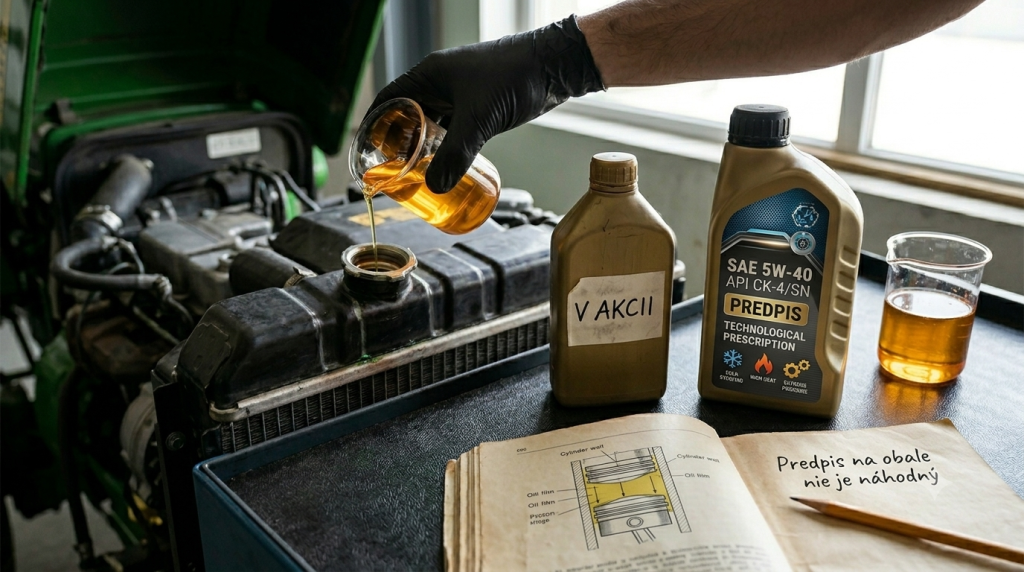
Engine Oil Guide: Decode the Labels & Extend Engine Life How to choose the right oil for your machine
The wrong engine oil can destroy a perfectly good engine faster than you think. Understanding viscosity grades, API classifications, and OEM specifications is not optional – it's essential for longevity.
Most people look at the viscosity number (like 15W-40) and think that's all that matters. But the truth is far more complex – and understanding it can save you thousands in repairs.
What's in a Number – The Viscosity Code
- W = Winter: The number before the "W" (e.g., 15W) indicates cold-start performance. Lower numbers flow better in cold weather.
- Second Number: The number after the "W" (e.g., 40) indicates viscosity at operating temperature (100°C). Higher numbers provide better protection under heavy load.
- Multigrade: Modern oils are designed to perform across a wide temperature range – that's why we have grades like 15W-40 or 10W-30.
⚠️ Common Mistake: Using the wrong viscosity can cause oil starvation at startup (too thick) or insufficient film strength under load (too thin). Always follow the manufacturer's spec – they know their engine best.
API, ACEA, and OEM Standards – What's the Difference?
API (American Petroleum Institute): The most common rating for diesel oils. Look for "CK-4" or "CJ-4" for modern diesel engines. Older engines may require "CH-4" or "CI-4."
ACEA (European Automobile Manufacturers' Association): European standards are often stricter than API. "E9" or "E7" are common for heavy-duty diesel engines.
OEM Specifications: This is the most important – manufacturers like John Deere, Caterpillar, and Cummins have their own specific standards. Meeting the OEM spec is what guarantees engine protection.
What the "Grizzly" Approach Delivers
At Grizzly Courage, we treat engine oil selection as critical engine protection. Here are the three pillars we consider:
- Viscosity grade matching your climate and workload: We consider your operating conditions – extreme cold, tropical heat, or mixed.
- API/ACEA level that meets or exceeds the manufacturer's minimum: Oil must be rated for the engine generation (EGR, DPF, SCR).
- OEM approval (e.g., John Deere Plus-50, Caterpillar ECF, Cummins CES): This is the only way to guarantee the oil has been tested for your specific engine design.
"What if you knew that the right oil could double your engine's service life?
Would that make you pay more attention to the labels?"
Don't know what oil your engine actually needs?
Grizzly Courage Code helps you identify the exact oil specification for your machine – viscosity, API, and OEM approval. Enter your machine type and we'll tell you what belongs in the sump.
Enter DiagnosticsDon't guess. Tell us what machine you operate – we'll tell you the correct oil, service interval, and operating tips that keep your engine running strong.
Diagnostics isn't about what we know. It's about what you need to know.